
The Shift in Urban Catfish Demand: Value-Added Processing, Vacuum Packaging, and Export Standards
The Evolution of the Consumer Palate
Historically, dried catfish was purchased exclusively in bustling open-air markets, displayed openly on wooden benches exposed to dust, flies, and unpredictable moisture levels.
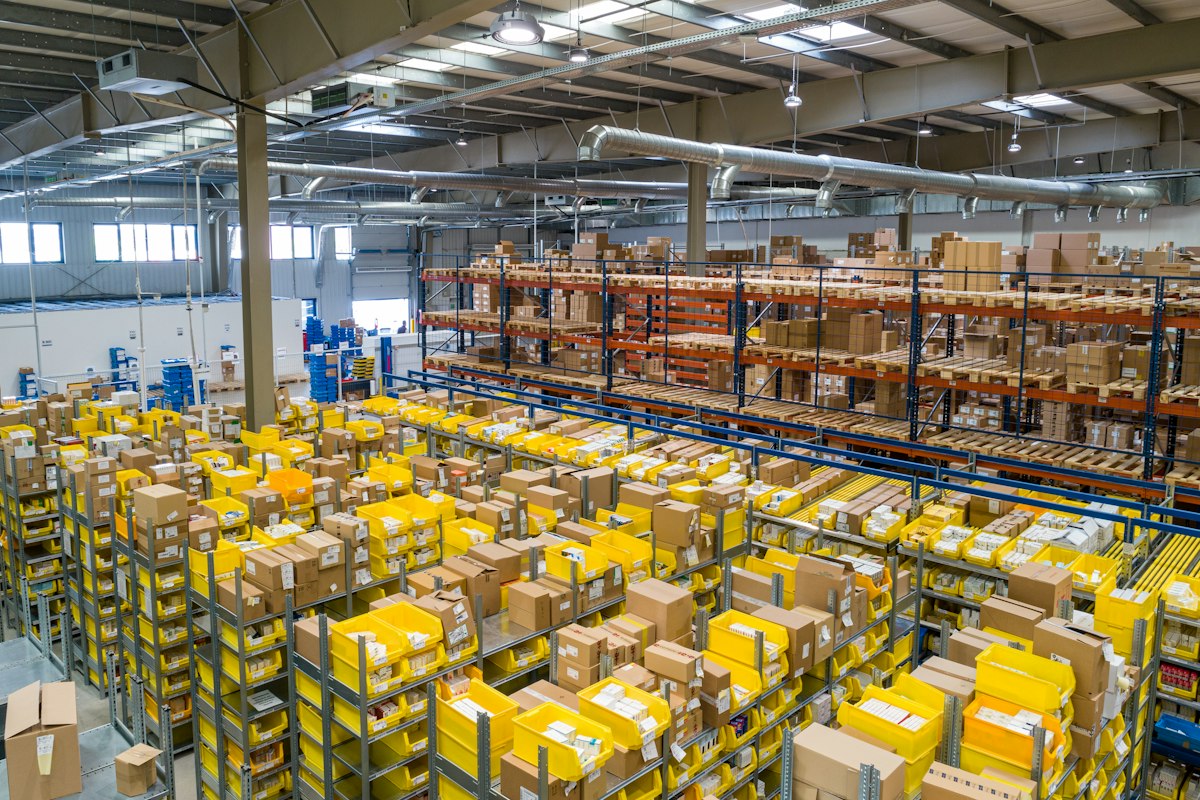
Over the past five years, modern retail outlets, supermarkets, and international diaspora families have created immense demand for traceable, sanitized aquaculture products.
Critical Value-Addition Standards
- Zero Soot Contamination: Modern consumers reject bitter polycyclic aromatic hydrocarbons (PAHs) caused by burning tires, damp firewood, or open flames. Kiln-dried fish must use indirect hot-air chambers.
- Moisture Content Below 12%: Properly dehydrated fish eliminates fungal mycelium and insect larva proliferation without relying on harmful insecticides.
- Food-Grade Multi-Layer Vacuum Packaging: Ensures a minimum 9-month ambient shelf life without moisture reabsorption.
At Lucky Fish Farms, our dedicated processing wing caters to this high-value demand, packaging dried catfish that meets stringent hygiene benchmarks suitable for local premium grocery chains and international baggage compliance.
HAVE A FISH FARMING QUESTION?
Our technical biologists and pond managers assist farmers with water quality analysis and stocking setups.
Related Insights
All Articles →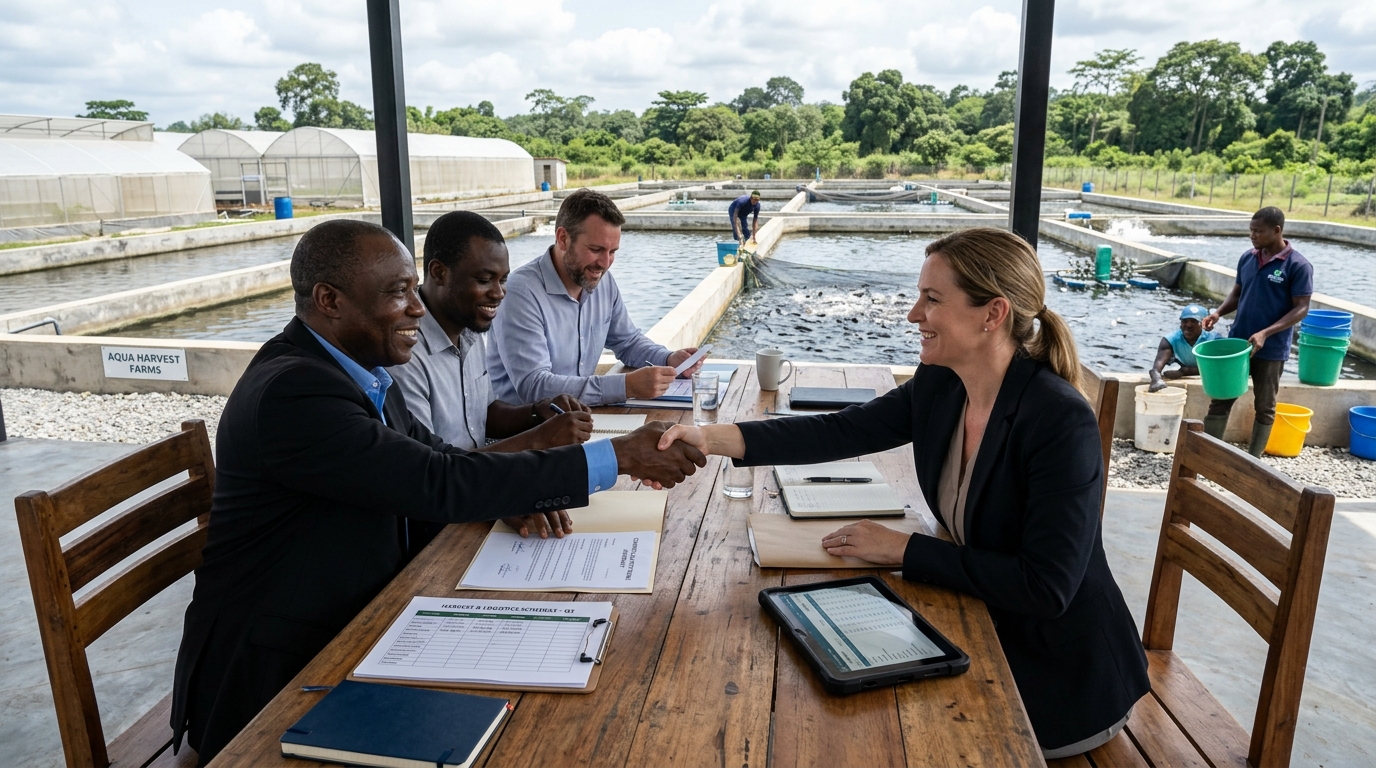
Offtake Contract Structures: Negotiating Guaranteed Harvest Purchases with Institutional Buyers
Never stock a fingerling without knowing who will buy the harvest. How to draft bilateral offtake contracts with frozen food distributors, canning plants, and supermarket networks.
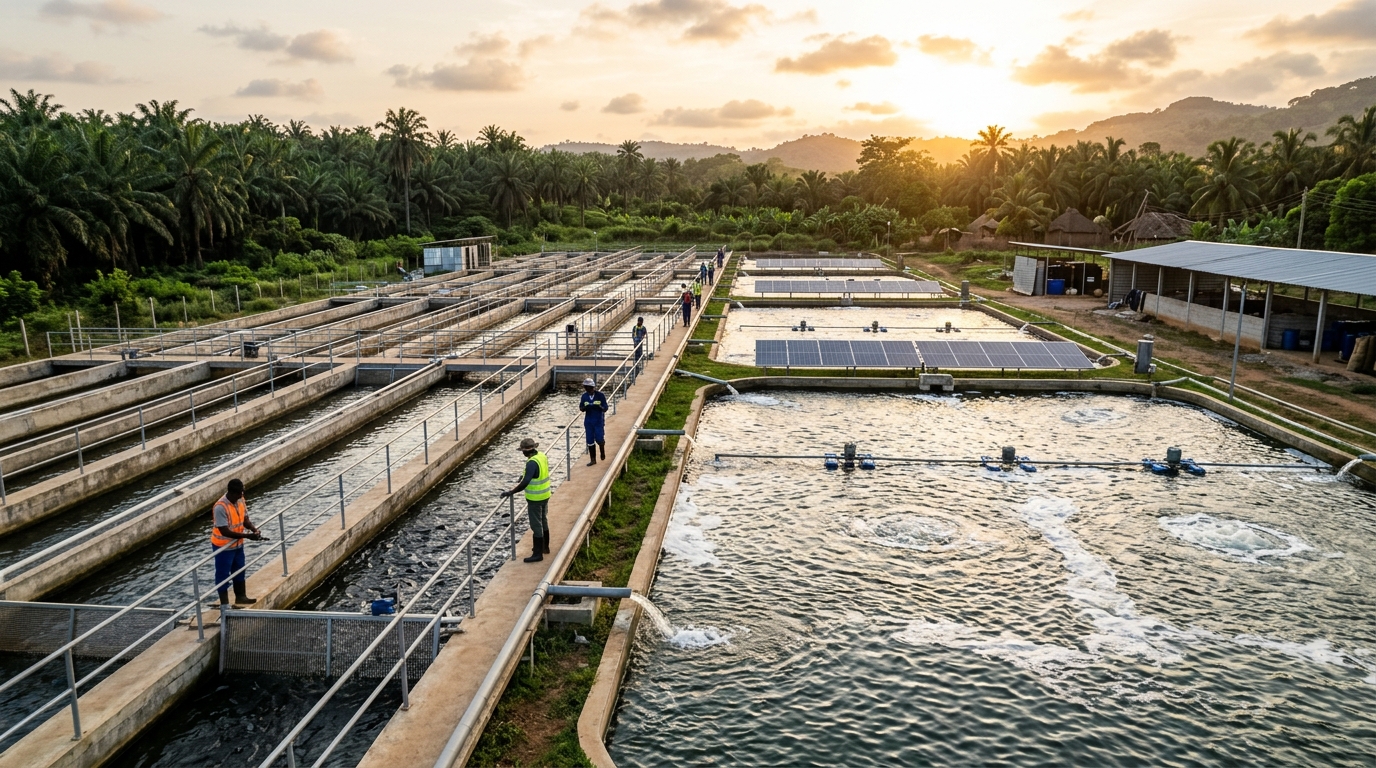
Pond Disinfection & Fallowing Science: Effective Chemical Sterilization and Sun-Baking Cycles
Skipping the mandatory between-cycle drying phase guarantees disease transmission to your next fingerling batch. Here is the complete post-harvest sanitation protocol.
On-Farm Feed Storage Science: Preventing Mycotoxins, Aflatoxins, and Rancid Fat Degradation
Storing feed on damp concrete floors in tropical heat triggers invisible Aspergillus flavus fungal growth within 10 days. Protect your investment with palletized, ventilated feed rooms.