
Understanding Feed Conversion Ratio (FCR): How Crude Protein Profiles Determine Commercial Margins

Demystifying Feed Conversion Ratio (FCR)
The Feed Conversion Ratio measures the kilograms of feed required to produce exactly one kilogram of live catfish body weight.
$$\text{FCR} = \frac{\text{Total Feed Consumed (kg)}}{\text{Net Body Weight Gained (kg)}}$$
If a farmer feeds 1,200 kg of feed to a batch of fish and achieves 1,000 kg of harvested catfish weight, the FCR is 1.2:1. An FCR of 1.1–1.3 is considered excellent commercial efficiency in African Catfish farming. If your FCR drifts beyond 1.6, your operating profit is rapidly evaporating into waste.
The Myth of Cheap Feed
A bag of feed priced 20% lower with an inferior amino acid profile and poor water stability often yields an FCR of 1.8.
- High-grade extruded floating feed (42% crude protein, balanced lysine and methionine) with an FCR of 1.15 produces a lower cost per kilogram of meat than low-grade feed requiring nearly double the volume.
Water Pollution and Sinking Loss
Quality extruded feeds float for at least 15 minutes, allowing farm technicians to monitor appetite and stop distributing when fish reach satiation. Sinking feeds that disintegrate within 3 minutes degrade water quality, trigger ammonia surges, and reduce the oxygen carrying capacity of the water.
HAVE A FISH FARMING QUESTION?
Our technical biologists and pond managers assist farmers with water quality analysis and stocking setups.
Related Insights
All Articles →
Offtake Contract Structures: Negotiating Guaranteed Harvest Purchases with Institutional Buyers
Never stock a fingerling without knowing who will buy the harvest. How to draft bilateral offtake contracts with frozen food distributors, canning plants, and supermarket networks.
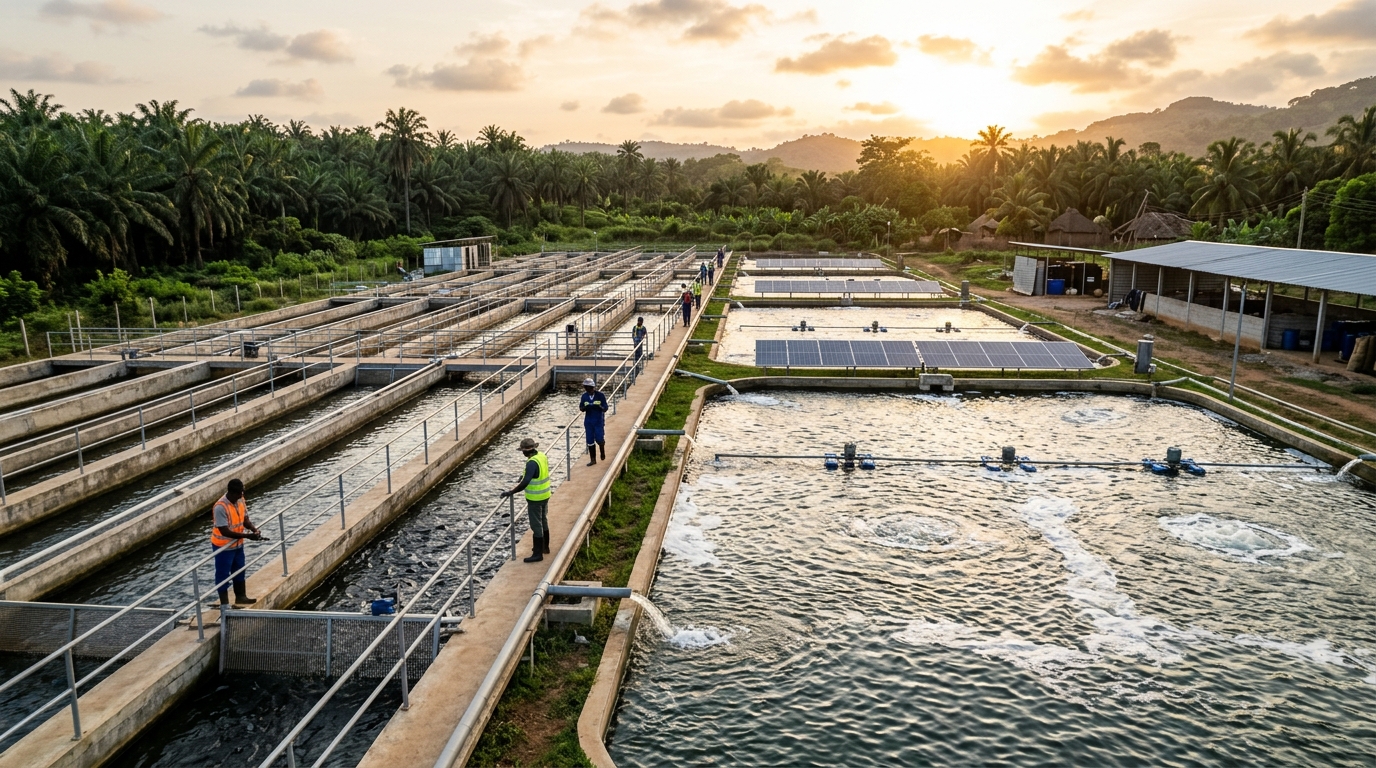
Pond Disinfection & Fallowing Science: Effective Chemical Sterilization and Sun-Baking Cycles
Skipping the mandatory between-cycle drying phase guarantees disease transmission to your next fingerling batch. Here is the complete post-harvest sanitation protocol.
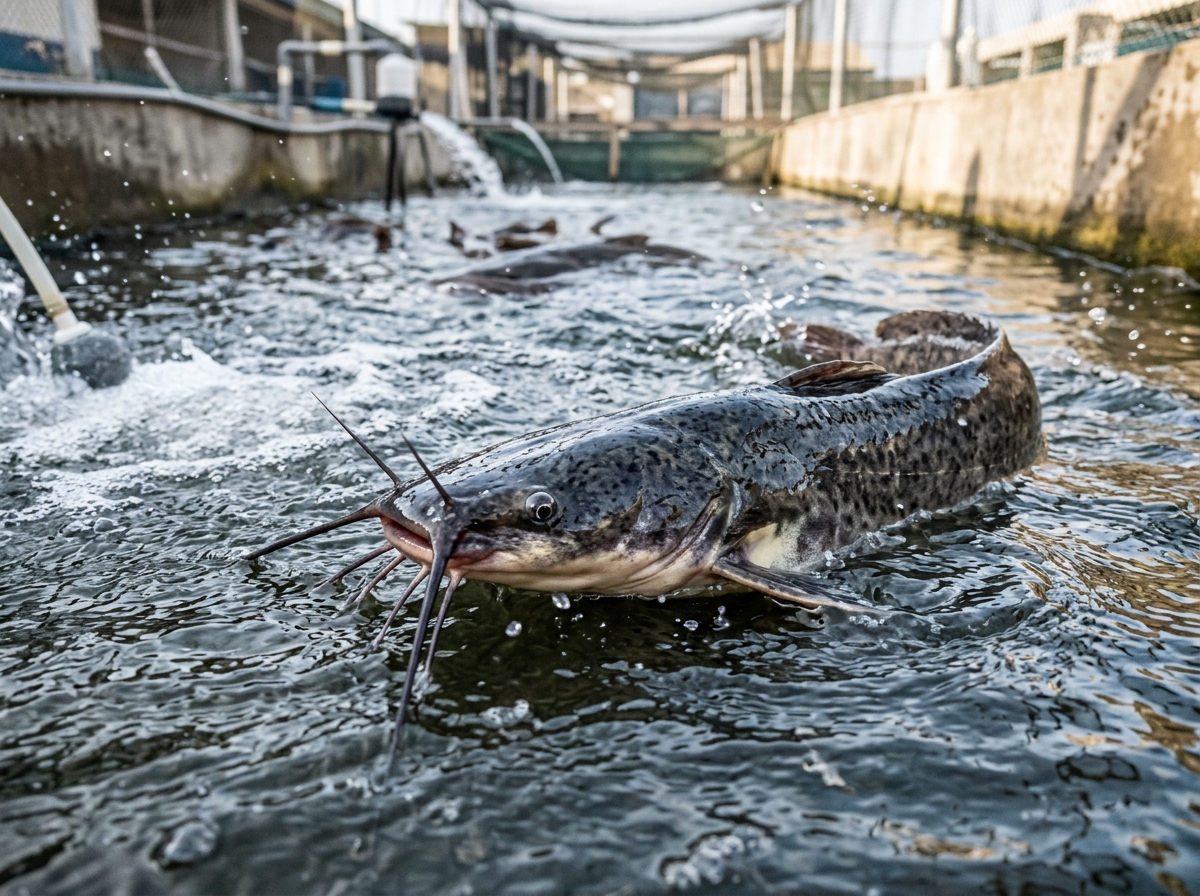
On-Farm Feed Storage Science: Preventing Mycotoxins, Aflatoxins, and Rancid Fat Degradation
Storing feed on damp concrete floors in tropical heat triggers invisible Aspergillus flavus fungal growth within 10 days. Protect your investment with palletized, ventilated feed rooms.