
Precision Feeding Tables: Calibrating Feeding Rates to Water Temperature and Biomass Sampling
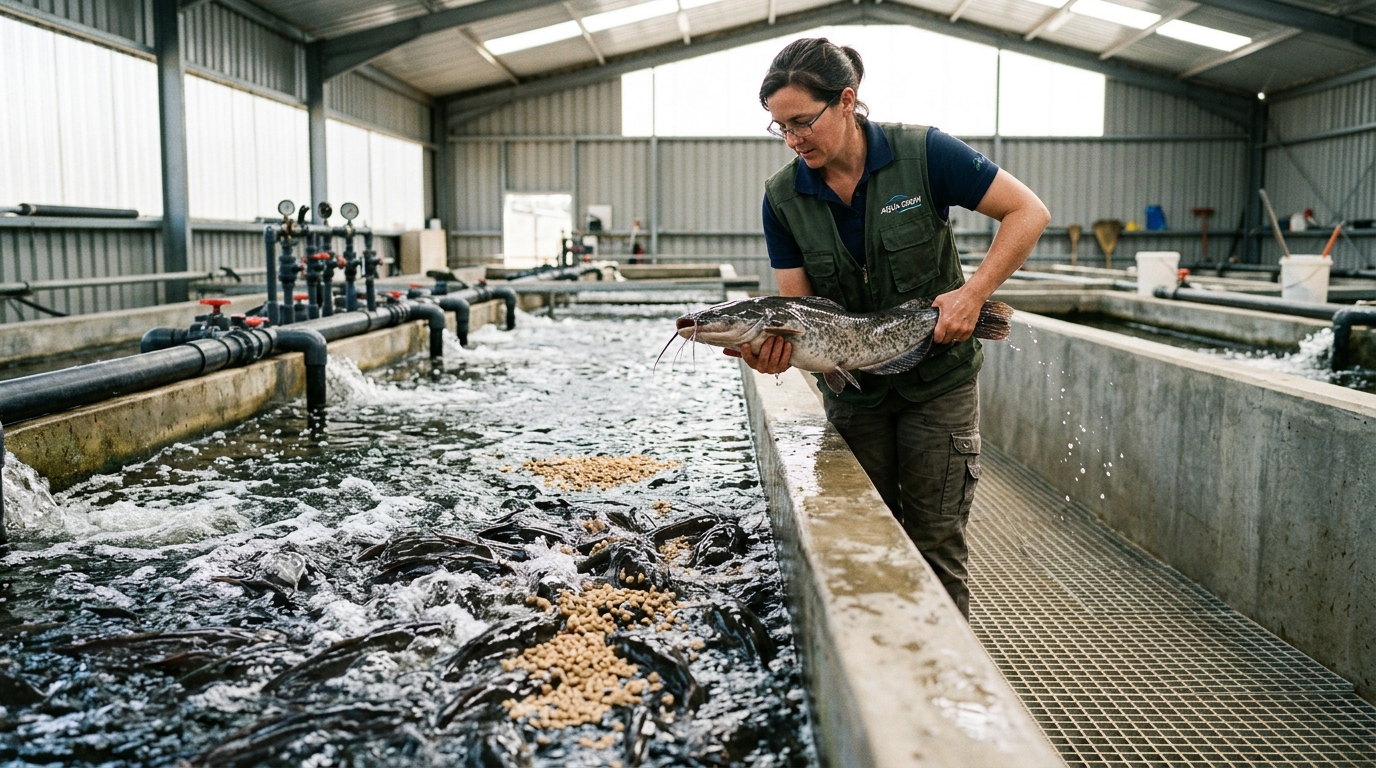
Why Static Feeding Schedules Fail
Catfish are poikilotherms: their metabolic rate rises and falls with water temperature. Furthermore, their body weight doubles every 2 to 3 weeks during the early grow-out phase.
Precision Feeding by Body Weight Percentage
- Fingerlings (5g–20g): Feed at 5.0% to 6.0% of total pond biomass daily, divided into 3 to 4 feedings.
- Juveniles (25g–150g): Feed at 3.5% to 4.5% of biomass daily, split into 2 feedings.
- Table Size (200g–1.2kg+): Feed at 1.8% to 2.5% of biomass daily, once or twice daily.
The Temperature Adjustment Factor
- Water Temperature 28°C–30°C: 100% of calculated feed allowance.
- Water Temperature 32°C+: Reduce feed by 30% (DO is reduced, metabolic stress high).
- Water Temperature < 23°C (Harmattan morning): Reduce feed by 50% (digestion slows drastically).
HAVE A FISH FARMING QUESTION?
Our technical biologists and pond managers assist farmers with water quality analysis and stocking setups.
Related Insights
All Articles →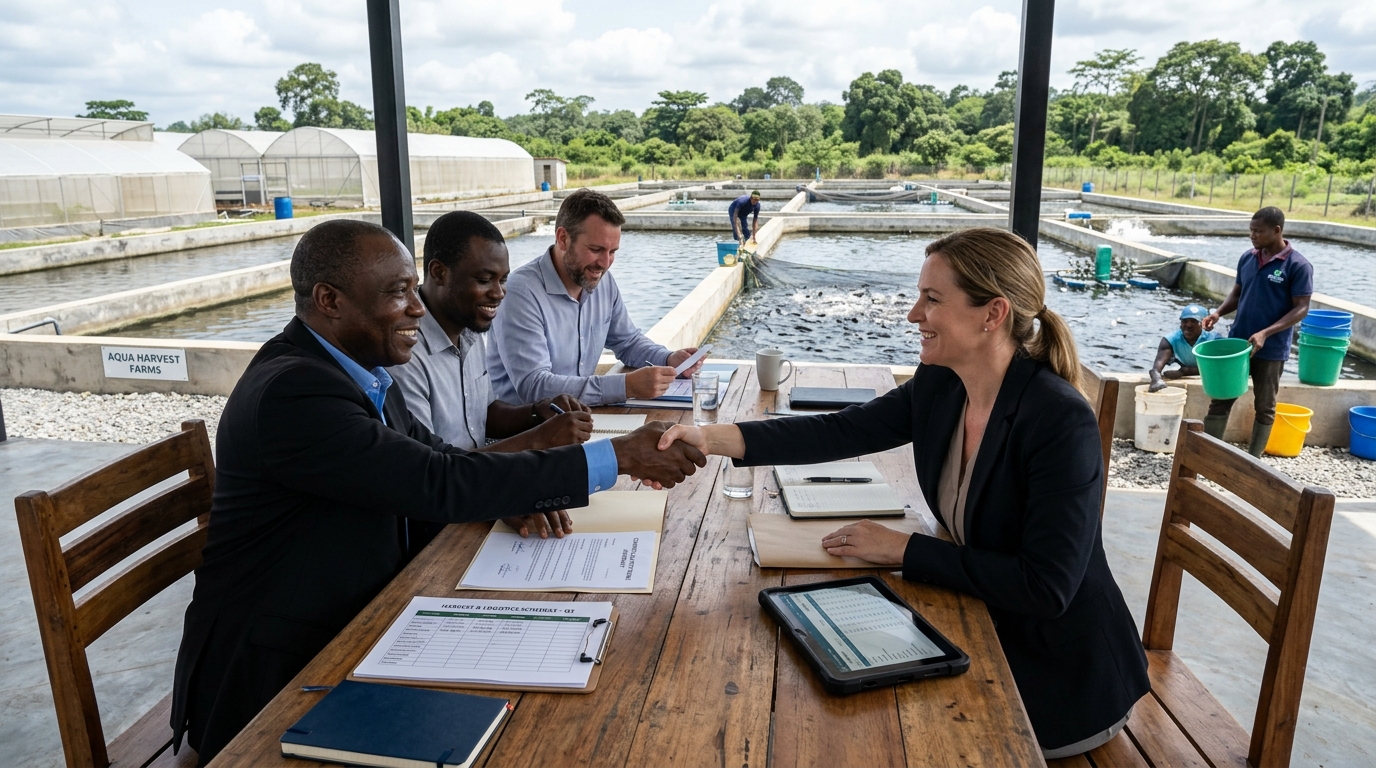
Offtake Contract Structures: Negotiating Guaranteed Harvest Purchases with Institutional Buyers
Never stock a fingerling without knowing who will buy the harvest. How to draft bilateral offtake contracts with frozen food distributors, canning plants, and supermarket networks.
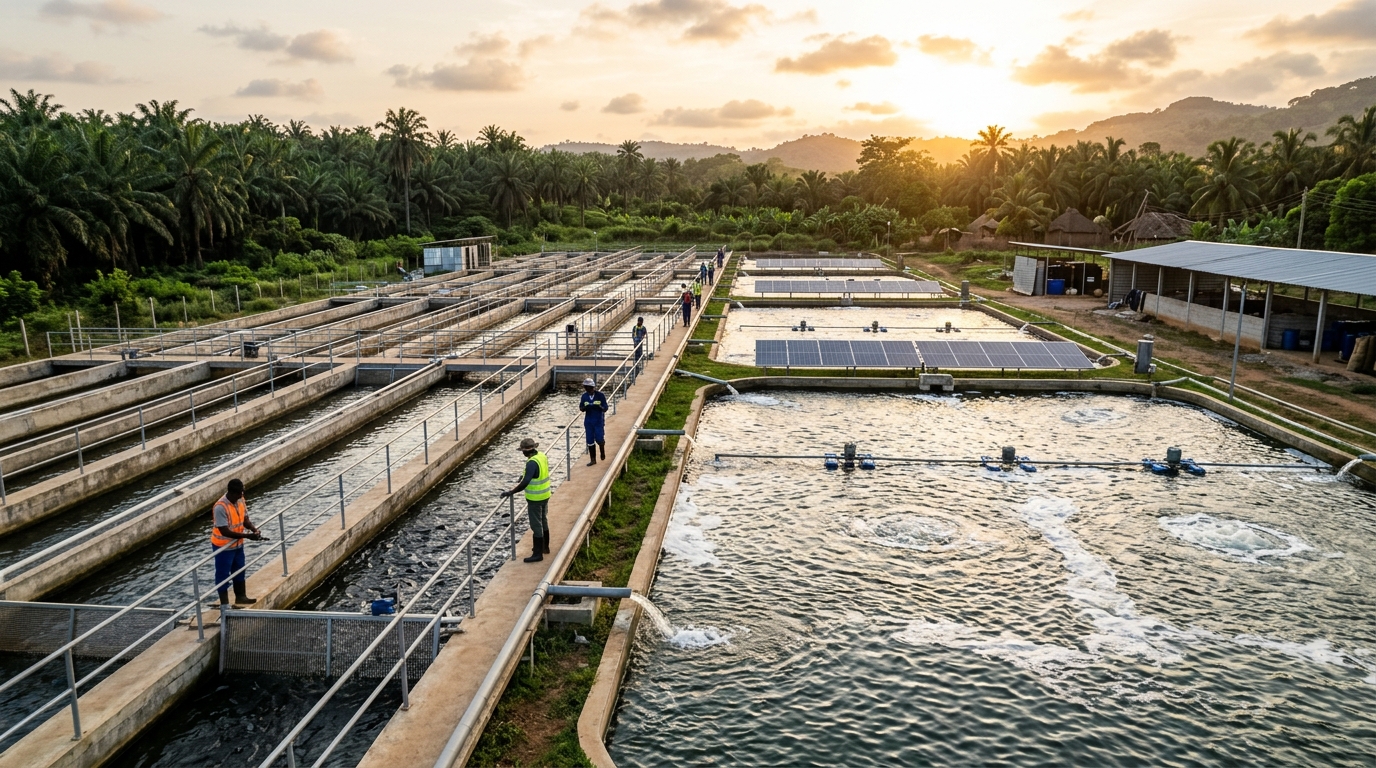
Pond Disinfection & Fallowing Science: Effective Chemical Sterilization and Sun-Baking Cycles
Skipping the mandatory between-cycle drying phase guarantees disease transmission to your next fingerling batch. Here is the complete post-harvest sanitation protocol.
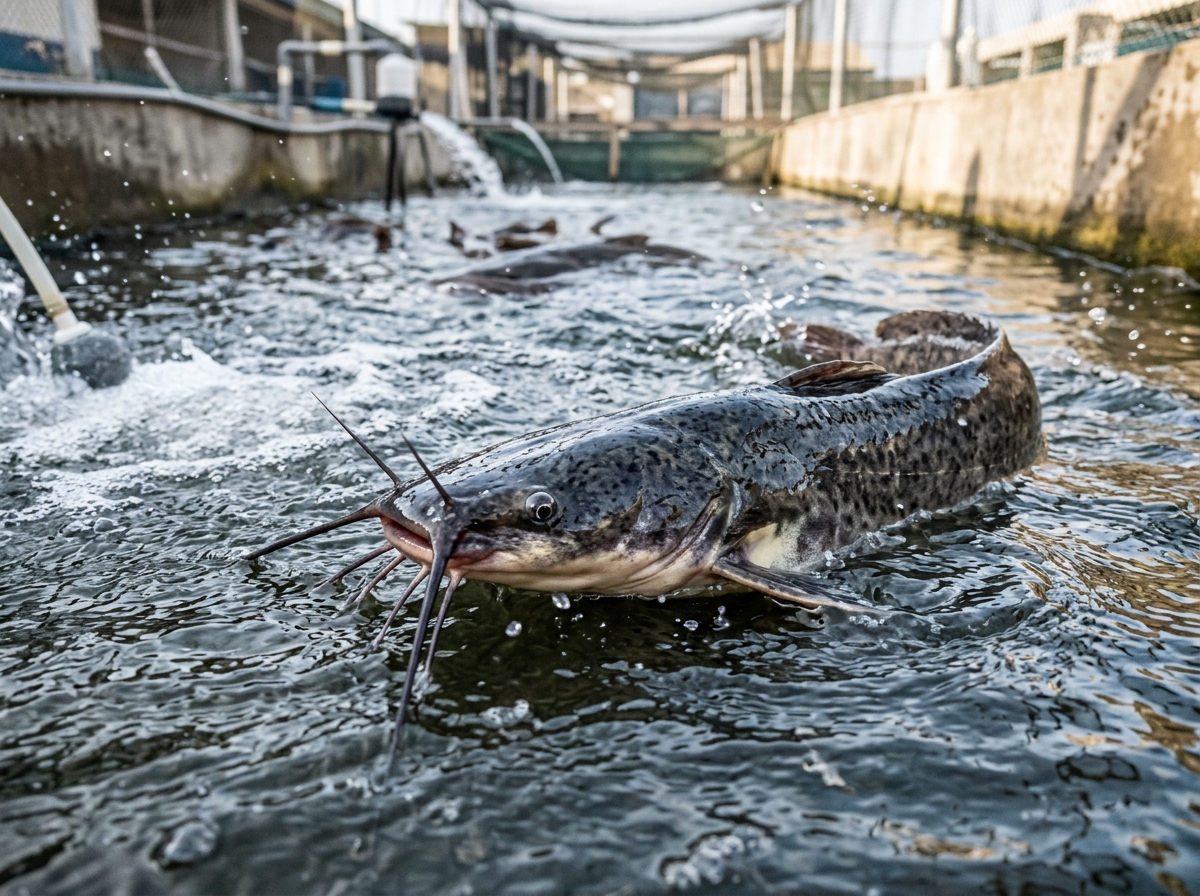
On-Farm Feed Storage Science: Preventing Mycotoxins, Aflatoxins, and Rancid Fat Degradation
Storing feed on damp concrete floors in tropical heat triggers invisible Aspergillus flavus fungal growth within 10 days. Protect your investment with palletized, ventilated feed rooms.