
Floating vs Sinking Pellets: When to Transition Fingerlings to Maximize Muscle Assimilation
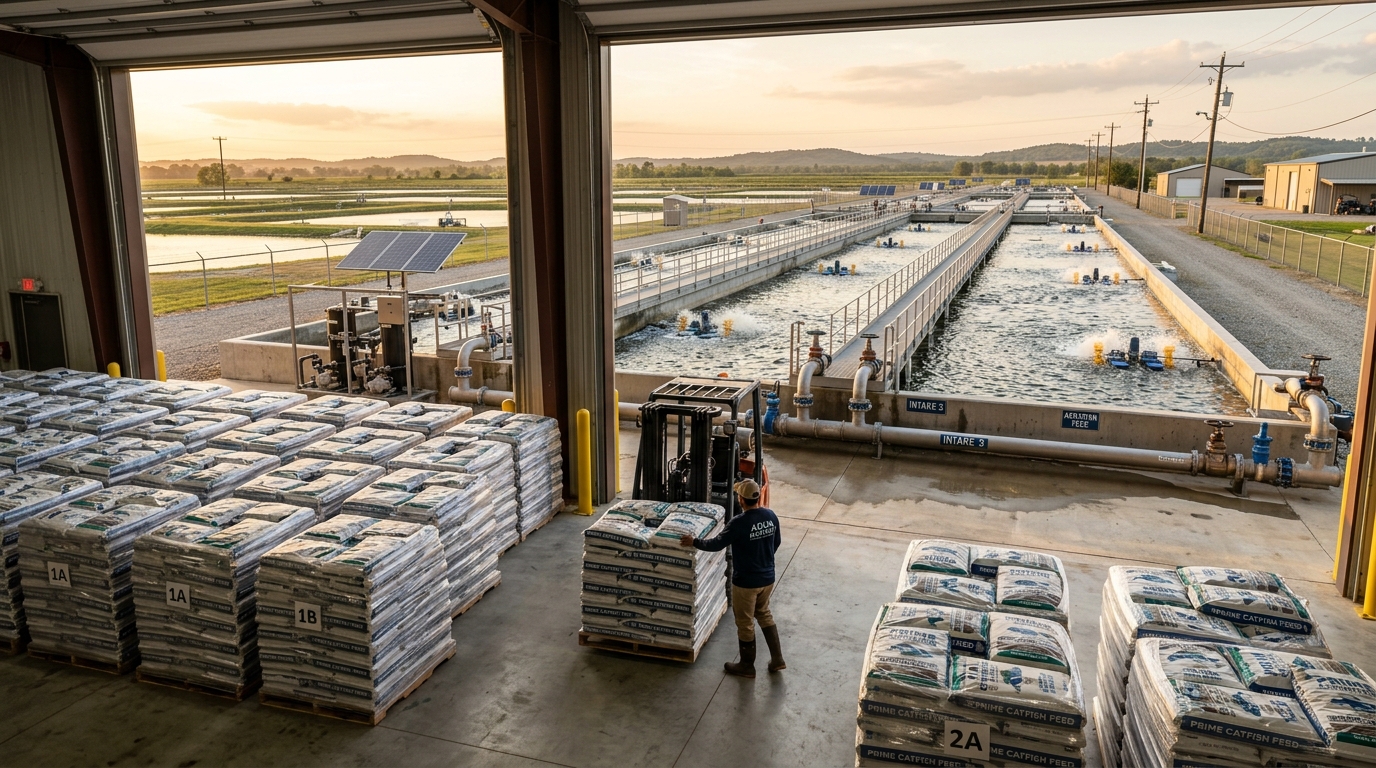
The Mechanics of Extrusion vs Compression Pelletizing
- Extruded (Floating) Feed: High heat, pressure, and steam gelatinize starches, expanding the pellet into an air-trapping matrix that floats indefinitely.
- Compressed (Sinking) Feed: Dense, cold-pressed pellets that sink directly to the tank floor within 5 seconds.
Strategic Feeding Timeline
- 0 to 60 Days (Nursery & Early Grow-Out): Use exclusively 100% extruded floating feed (0.8mm to 2.0mm, 45% to 56% crude protein). Visual tracking is mandatory to avoid ammonia poisoning.
- 60 to 120 Days (Intermediate Fattening): Maintain 42% protein floating feed (3.0mm to 4.5mm).
- Final 30-Day Finish (Optional Controlled Tanks): High-density concrete raceways equipped with self-cleaning drains can introduce 25% high-protein sinking feed during evening feedings to maximize final belly weight.
HAVE A FISH FARMING QUESTION?
Our technical biologists and pond managers assist farmers with water quality analysis and stocking setups.
Related Insights
All Articles →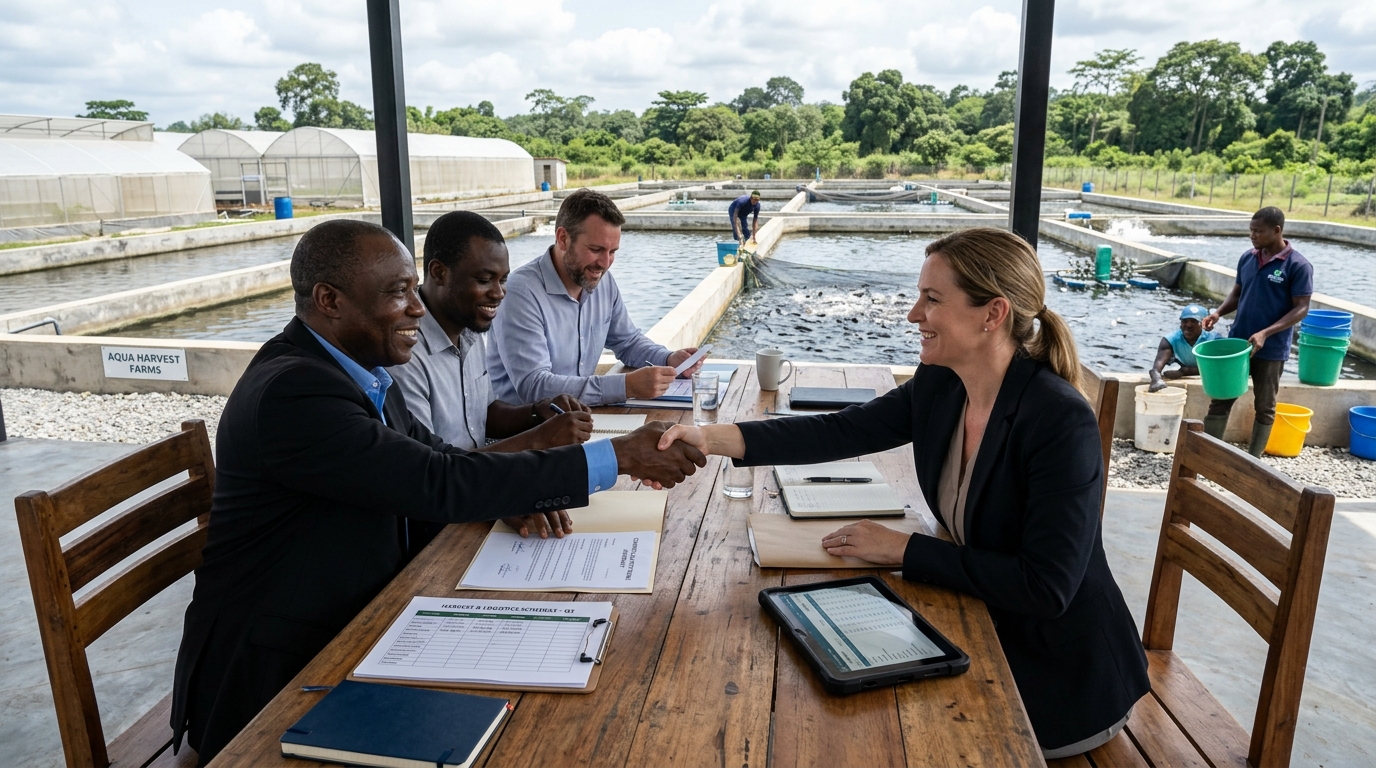
Offtake Contract Structures: Negotiating Guaranteed Harvest Purchases with Institutional Buyers
Never stock a fingerling without knowing who will buy the harvest. How to draft bilateral offtake contracts with frozen food distributors, canning plants, and supermarket networks.
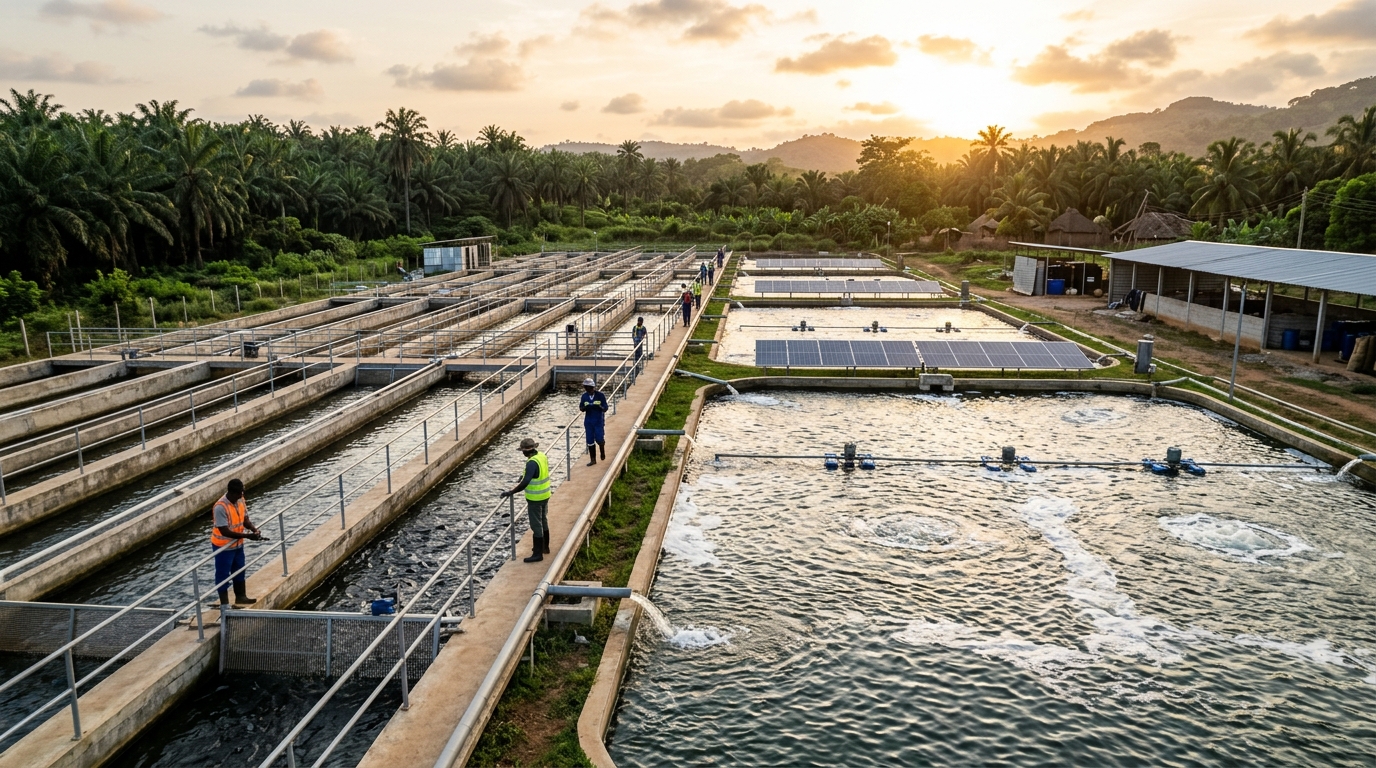
Pond Disinfection & Fallowing Science: Effective Chemical Sterilization and Sun-Baking Cycles
Skipping the mandatory between-cycle drying phase guarantees disease transmission to your next fingerling batch. Here is the complete post-harvest sanitation protocol.
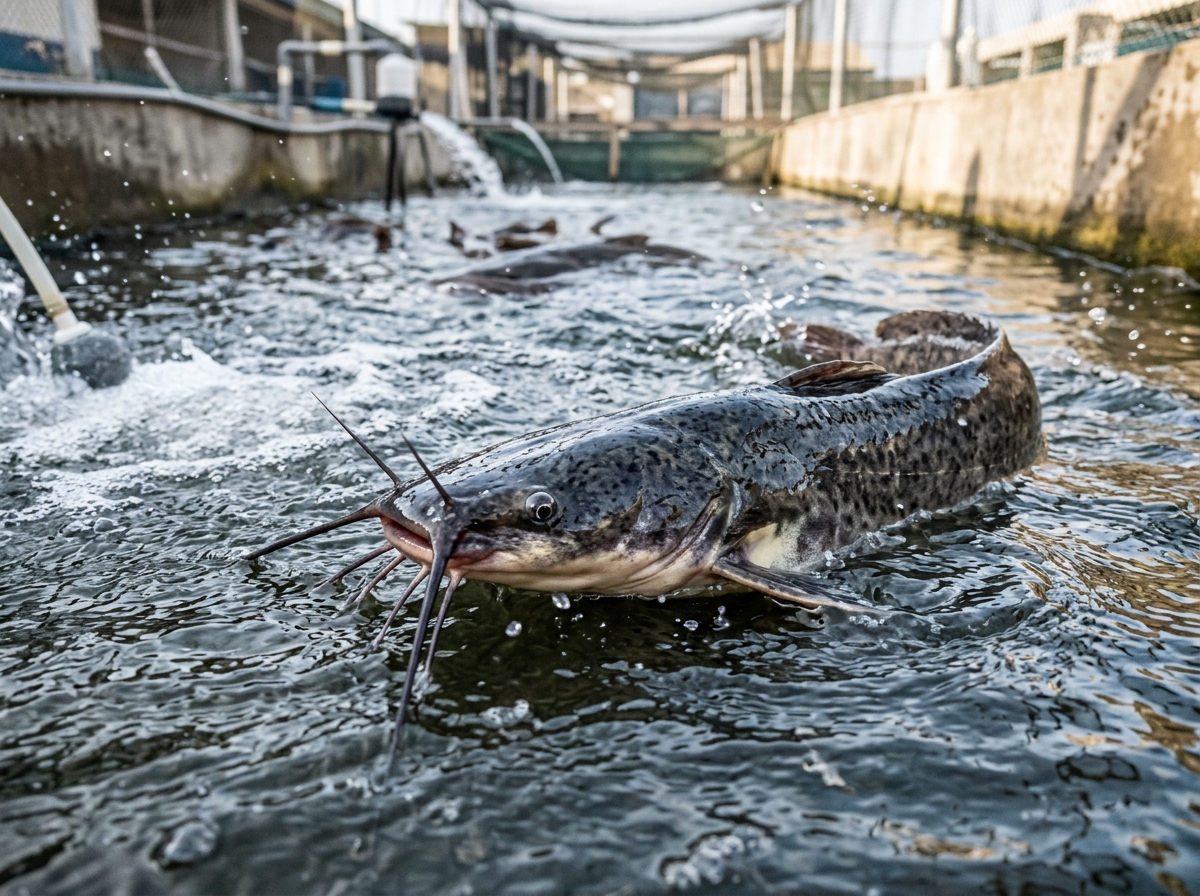
On-Farm Feed Storage Science: Preventing Mycotoxins, Aflatoxins, and Rancid Fat Degradation
Storing feed on damp concrete floors in tropical heat triggers invisible Aspergillus flavus fungal growth within 10 days. Protect your investment with palletized, ventilated feed rooms.