From Concrete Tanks to Earthen Ponds: A Practical Blueprint for Capital-Efficient Fish Farming
Planning Before Purchasing: The Golden Rule of Aquaculture
Many aspiring fish farmers make the critical mistake of acquiring fingerlings before securing reliable water drainage, feed supply lines, or buyer commitments. Fish farming is fundamentally a logistics and biological risk management discipline.
Step 1: The Production System Selection Matrix
| Parameter | Concrete Raceways | Earthen Ponds | Tarpaulin / HDPE Tanks |
|---|---|---|---|
| Land Requirement | Compact (Urban friendly) | Large acreage needed | Minimal / Flexible |
| Initial Capital | Moderate to High | Low to Moderate | Low |
| Growth Speed | Moderate | Fastest (Natural plankton) | Moderate |
| Water Requirement | High daily exchange | Low (Static with top-ups) | High daily exchange |
| Harvest Ease | Complete drain in minutes | Requires seining & pumping | Instant bottom gate |
Step 2: The Critical 3-Month Nursery Conditioning
Never stock fragile fingerlings directly into vast earthen ponds. The risk of predation, uneven feeding competition, and undetectable mortality is too high.
Best Practice Protocol:
- House 4–5cm fingerlings in aerated concrete or nursery tanks for 45 to 60 days until they achieve solid juvenile status (25g–40g).
- Grade them every 14 days into three distinct size cohorts (Alpha, Beta, Gamma) to stop cannibalism.
- Transfer robust juveniles to production ponds for the 4-month fattening phase.
HAVE A FISH FARMING QUESTION?
Our technical biologists and pond managers assist farmers with water quality analysis and stocking setups.
Related Insights
All Articles →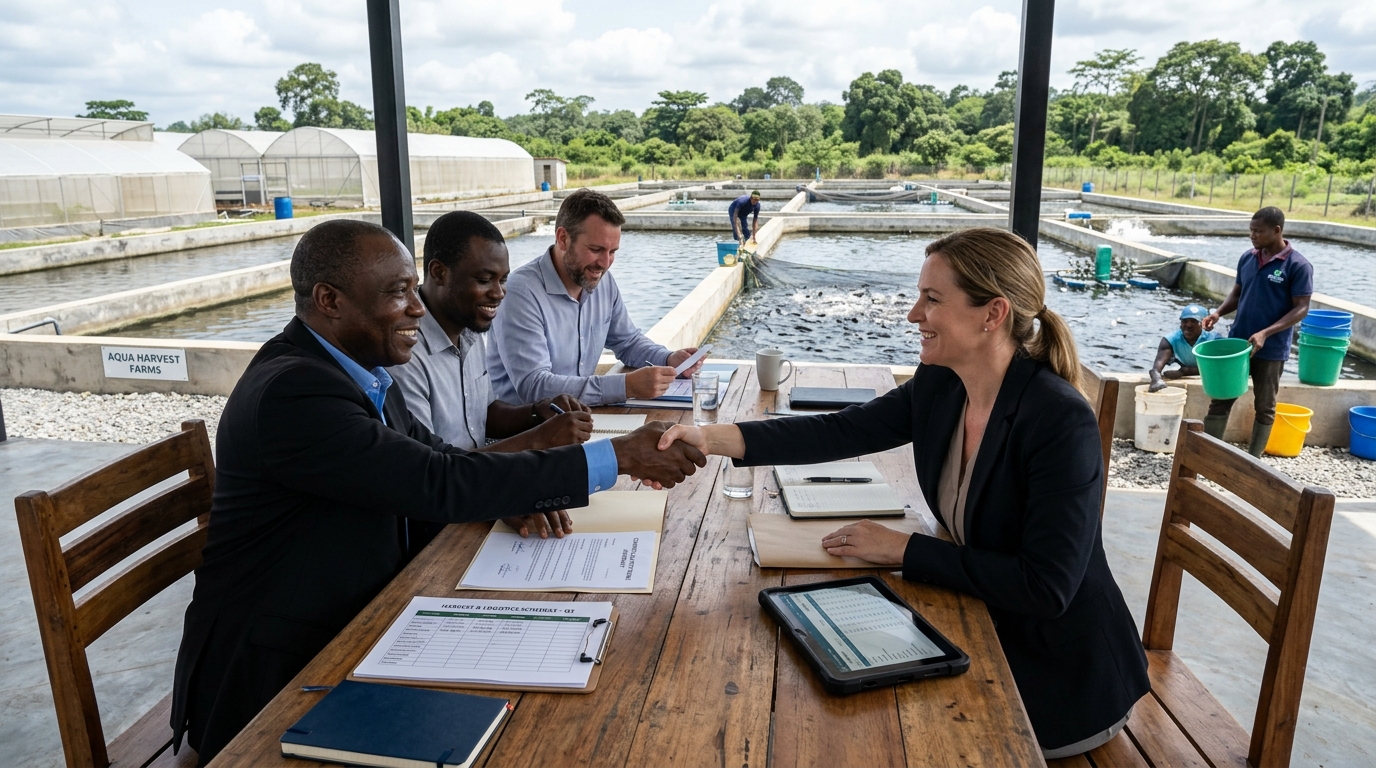
Offtake Contract Structures: Negotiating Guaranteed Harvest Purchases with Institutional Buyers
Never stock a fingerling without knowing who will buy the harvest. How to draft bilateral offtake contracts with frozen food distributors, canning plants, and supermarket networks.
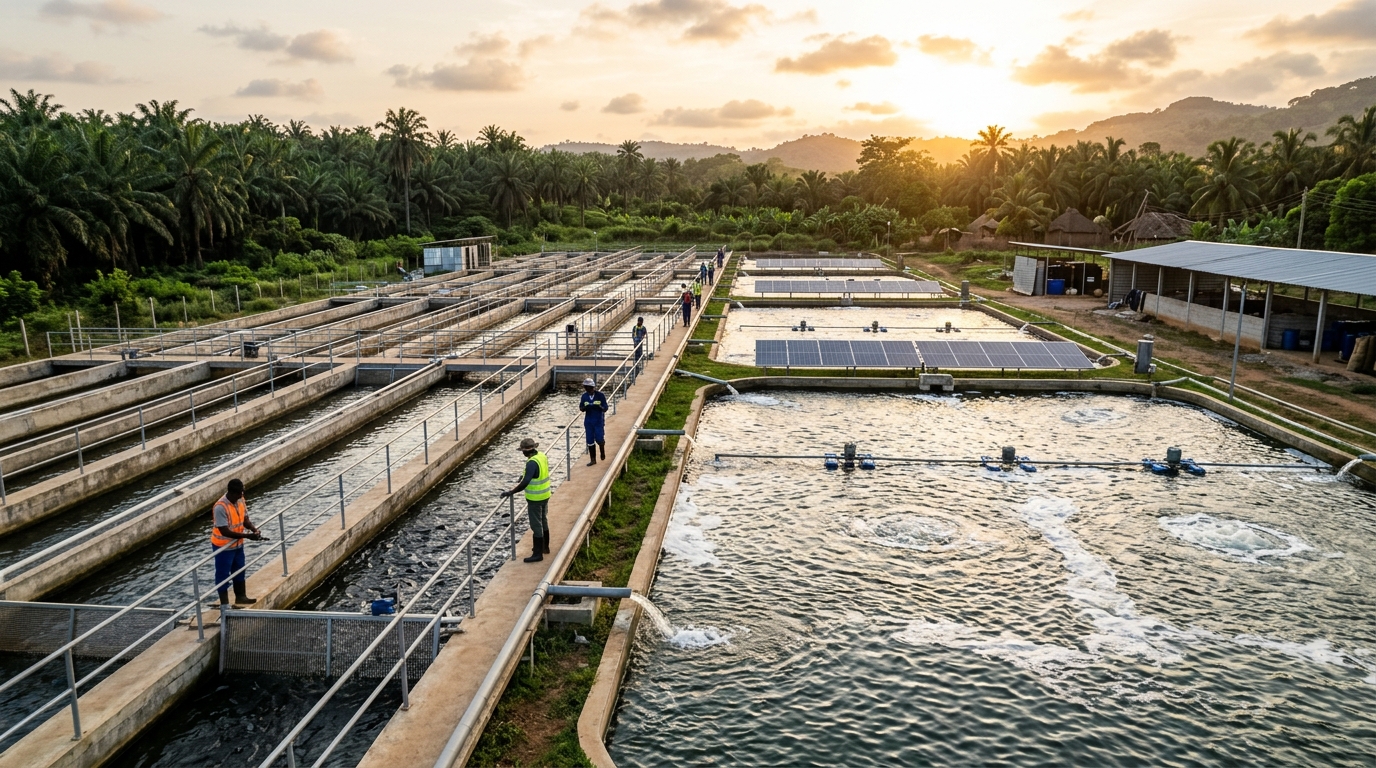
Pond Disinfection & Fallowing Science: Effective Chemical Sterilization and Sun-Baking Cycles
Skipping the mandatory between-cycle drying phase guarantees disease transmission to your next fingerling batch. Here is the complete post-harvest sanitation protocol.
On-Farm Feed Storage Science: Preventing Mycotoxins, Aflatoxins, and Rancid Fat Degradation
Storing feed on damp concrete floors in tropical heat triggers invisible Aspergillus flavus fungal growth within 10 days. Protect your investment with palletized, ventilated feed rooms.