Aquaculture Automation: How Sensor Telemetry and AI Feeding Systems Cut Farm Overhead
The High Cost of Subjective Feed Scheduling
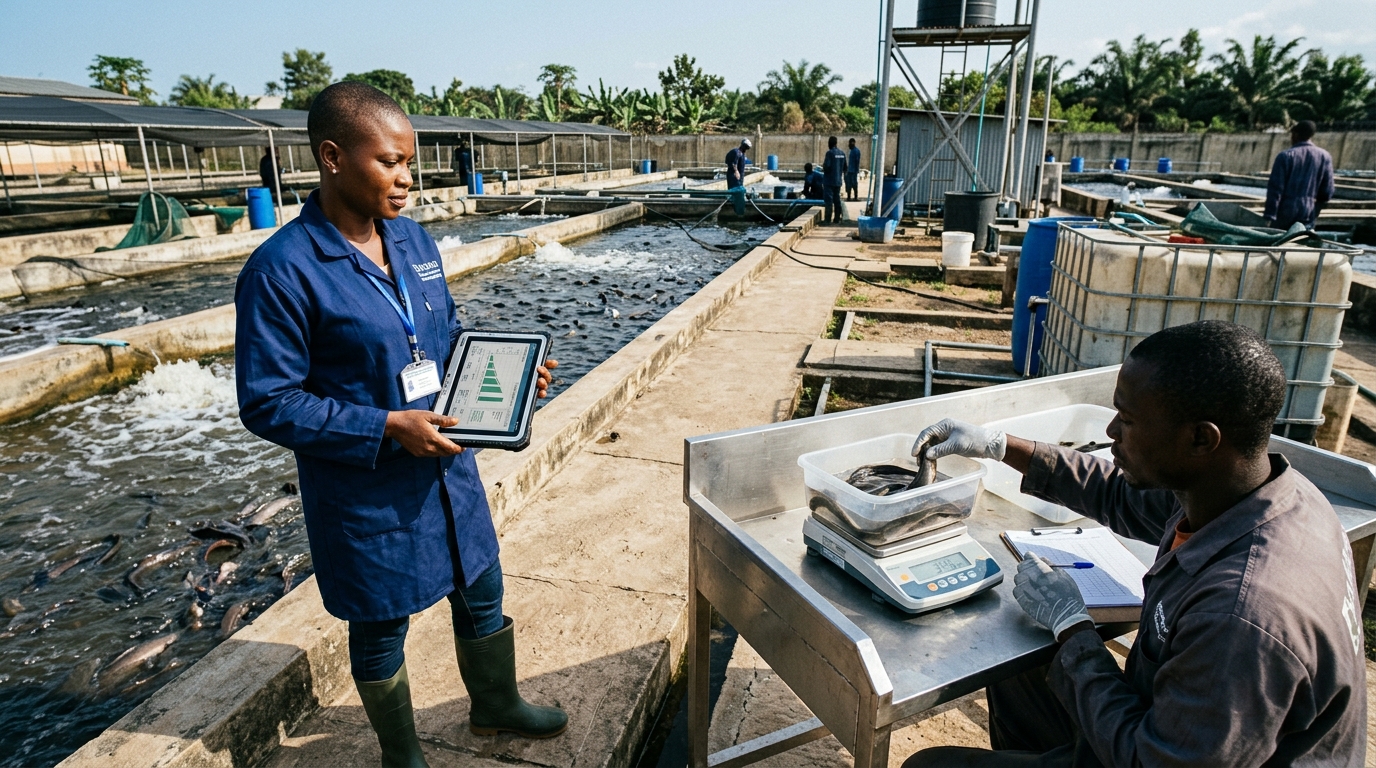
In conventional catfish rearing, feed distribution is left to farm hands using visual cues. If a feeder misjudges fish satiation or dumps feed into an oxygen-depleted zone, up to 15% of high-cost feed settles uneaten, rotting at the bottom.
1. Real-Time Telemetry Arrays
By deploying optical sensors that measure dissolved oxygen (DO), temperature, and un-ionized ammonia every 15 minutes, automated telemetry platforms alert technicians the instant pond chemistry falls out of the optimum envelope (DO > 5.0 mg/L, pH 7.2–7.6).
2. Algorithmic Surface Feeders
Acoustic surface hydrophones listen for the frequency and decibel output of catfish feeding strikes. As feeding intensity plateaus, the automated feeder slows and cuts distribution, achieving FCR improvements of 0.15 to 0.22 points across single grow-out cycles.
HAVE A FISH FARMING QUESTION?
Our technical biologists and pond managers assist farmers with water quality analysis and stocking setups.
Related Insights
All Articles →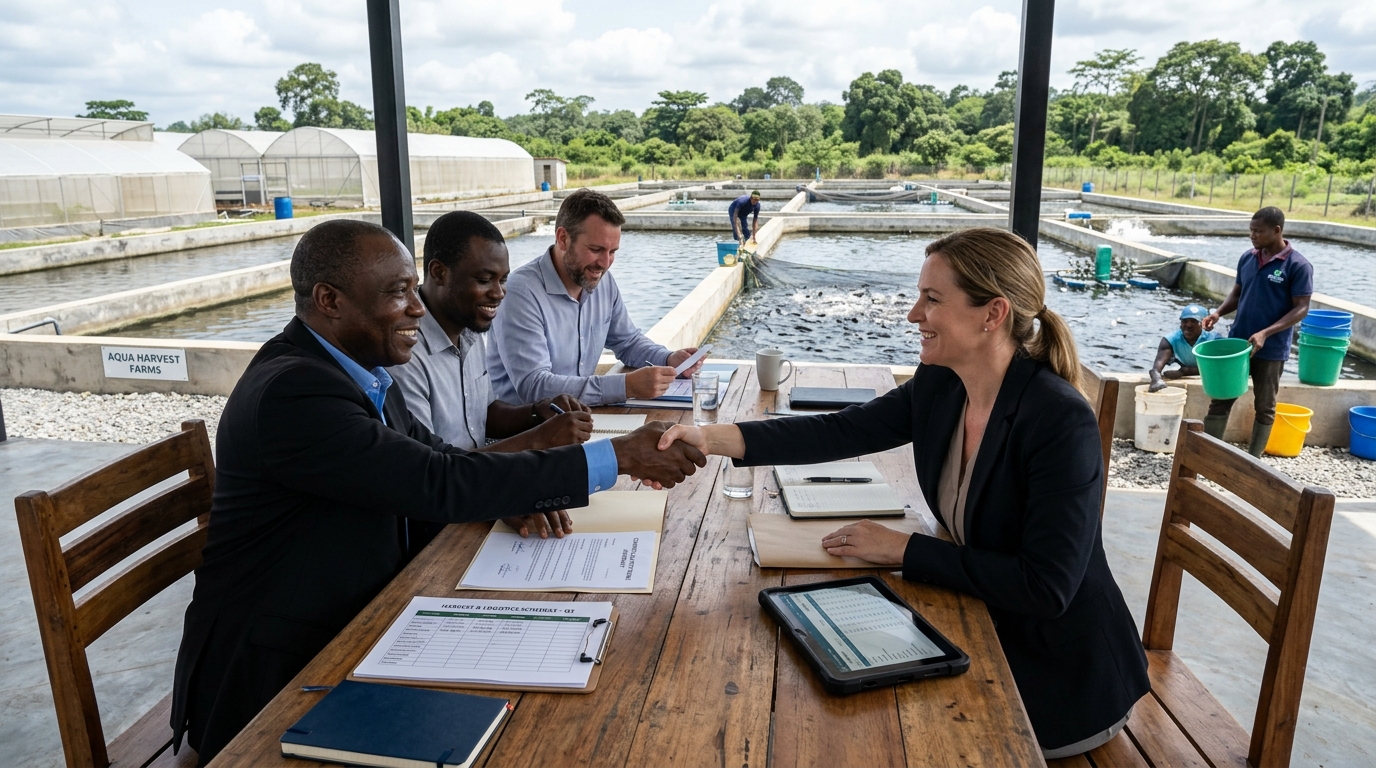
Offtake Contract Structures: Negotiating Guaranteed Harvest Purchases with Institutional Buyers
Never stock a fingerling without knowing who will buy the harvest. How to draft bilateral offtake contracts with frozen food distributors, canning plants, and supermarket networks.
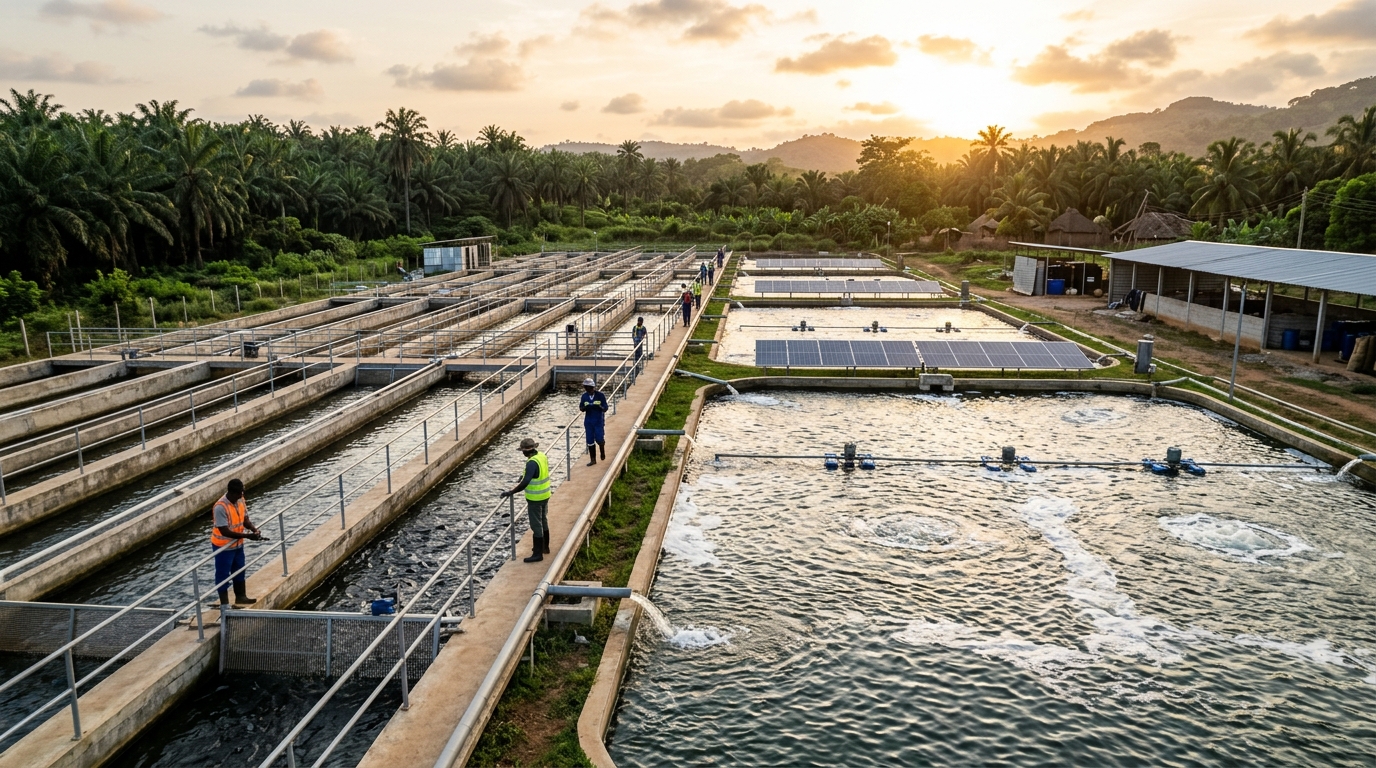
Pond Disinfection & Fallowing Science: Effective Chemical Sterilization and Sun-Baking Cycles
Skipping the mandatory between-cycle drying phase guarantees disease transmission to your next fingerling batch. Here is the complete post-harvest sanitation protocol.
On-Farm Feed Storage Science: Preventing Mycotoxins, Aflatoxins, and Rancid Fat Degradation
Storing feed on damp concrete floors in tropical heat triggers invisible Aspergillus flavus fungal growth within 10 days. Protect your investment with palletized, ventilated feed rooms.